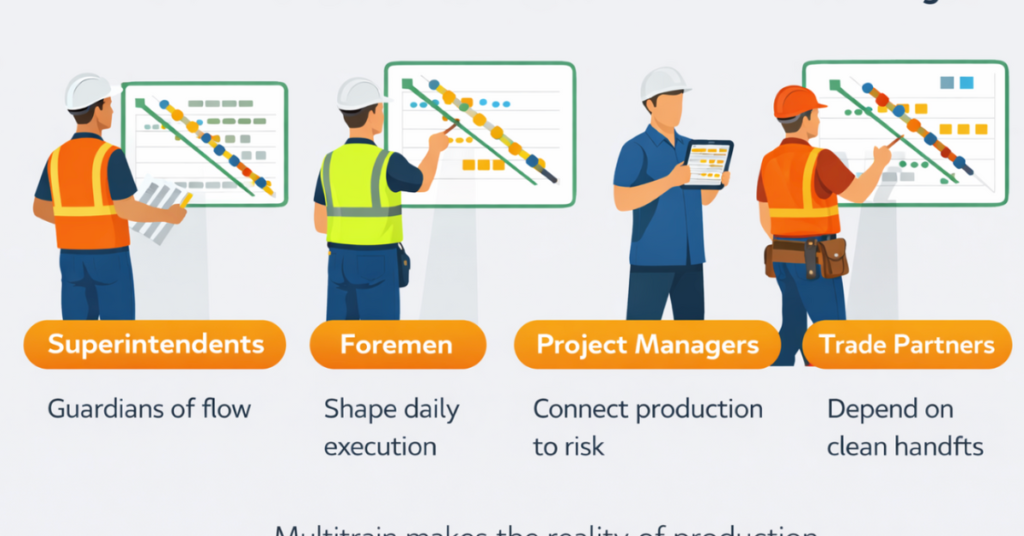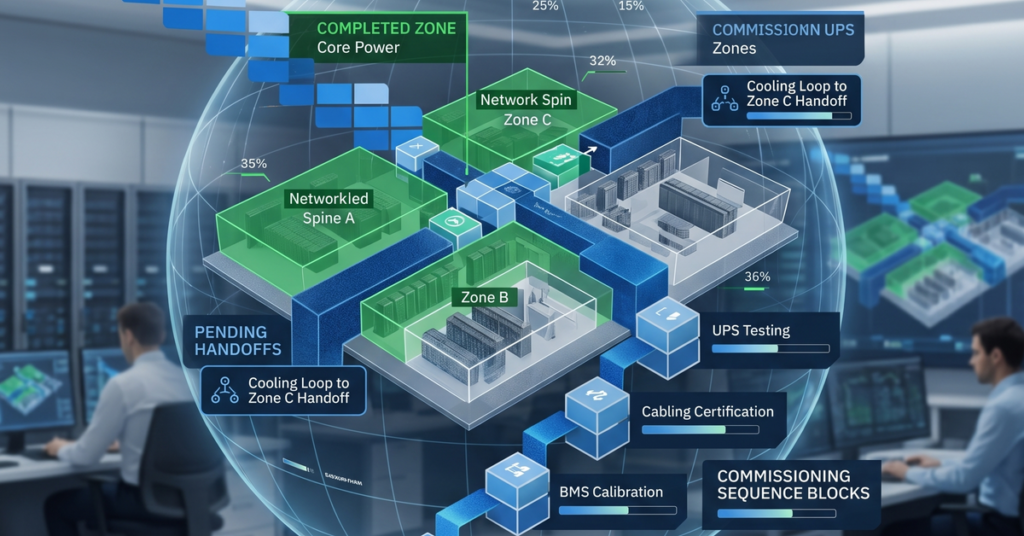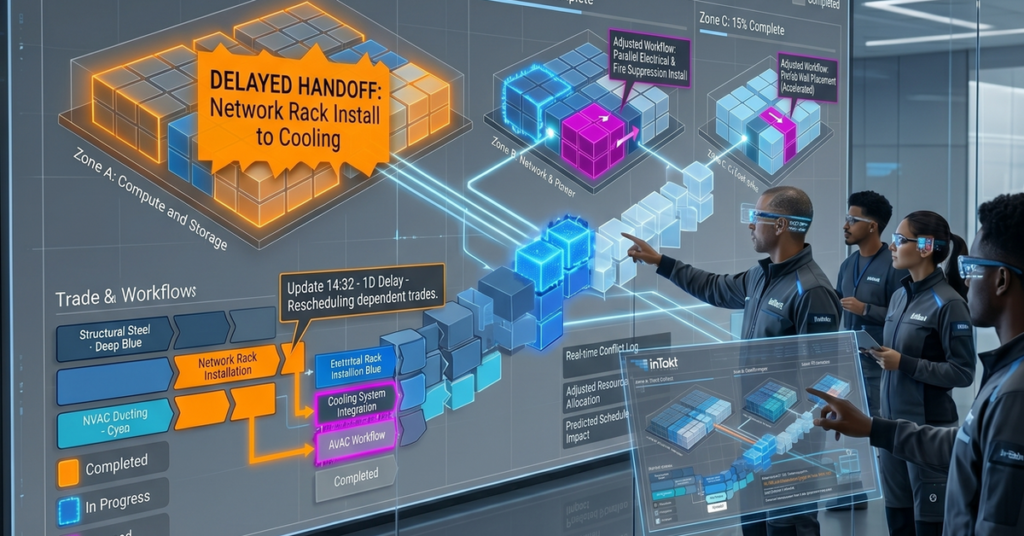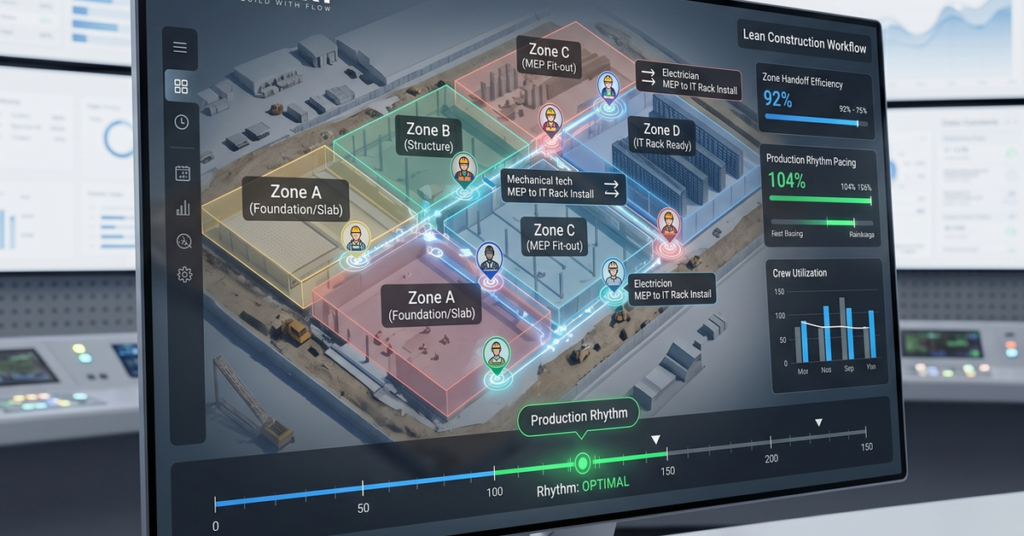
Superintendents should know multitrain because they are the guardians of flow. They coordinate access, logistics, and handoffs. A multitrain view helps them see where conflict is coming, where readiness is weak, and what must be protected to keep the train moving.
Foremen should know multitrain because it shapes daily execution. A foreman does not need theory. They need clarity about where their crew should be, what done means, and what prerequisites must be in place before they enter a zone. Multitrain makes that clarity easier to share across trades.
Project managers should know multitrain because it connects production to risk. It reveals where procurement, approvals, and long lead constraints will impact the field. In the IPCS system, this link between planning and control is what prevents late surprises.
Trade partners should know multitrain because it protects them. A stable train reduces stacking, reduces rework, and creates predictable work fronts. When the whole team understands multitrain, the project stops relying on heroics and starts relying on a production system that makes success repeatable.