Takt Planning for Commercial Office Buildings
- Valeria Valenzuela
- Mar 19
- 1 min read

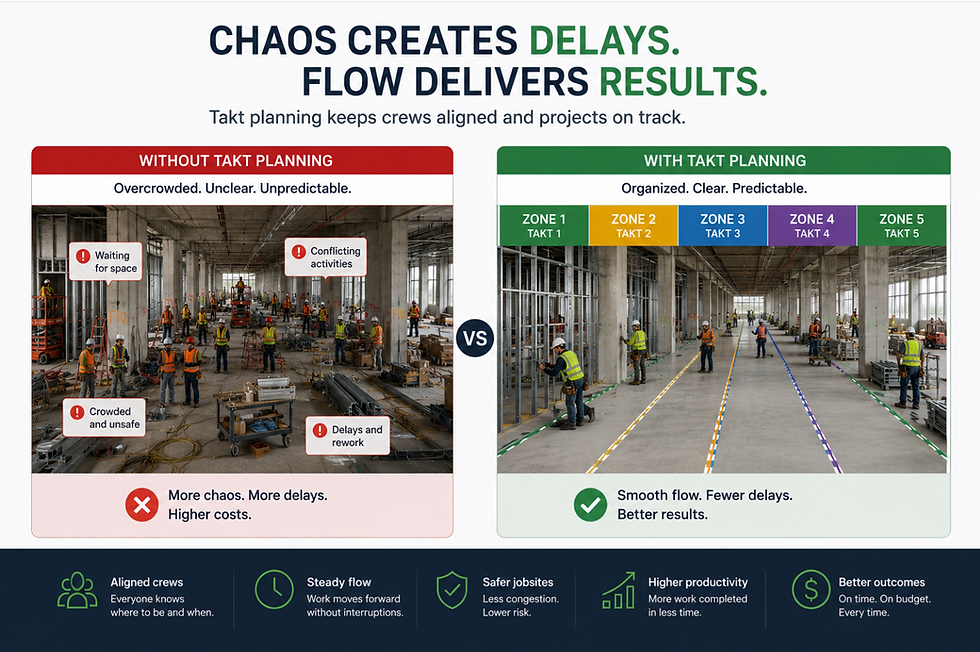
Commercial office projects often involve complex coordination between multiple trades working in shared spaces. Mechanical systems, electrical distribution, ceilings, finishes, and inspections all compete for the same areas. Without a structured production system, crews constantly interfere with each other.
Traditional scheduling methods typically focus on activities and milestone dates. While this works at a high level, it does not always help teams manage daily production in the field. Crews still need to decide where to work and how to avoid stacking with other trades.
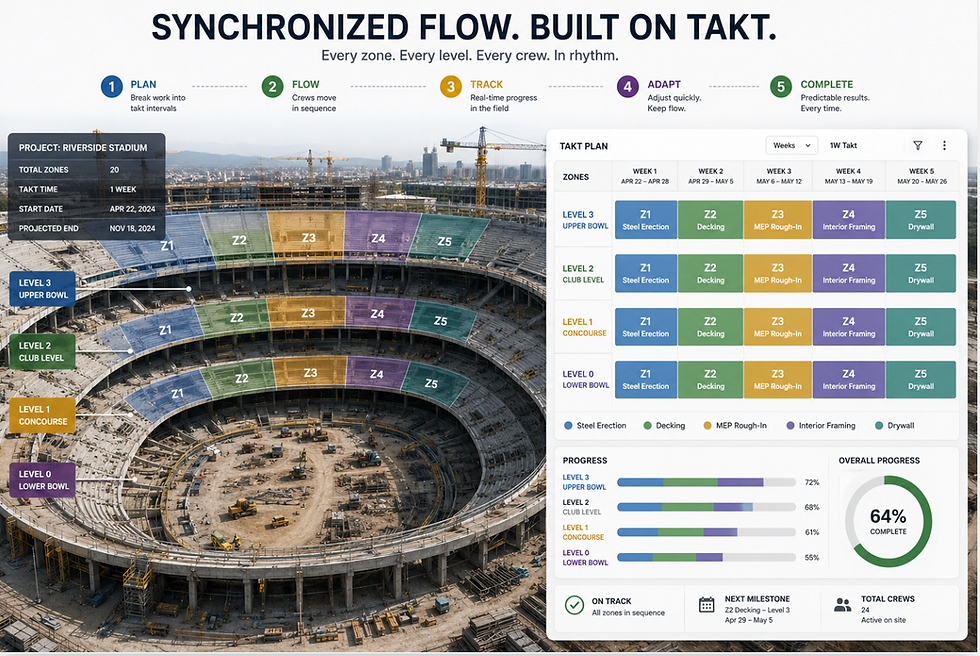
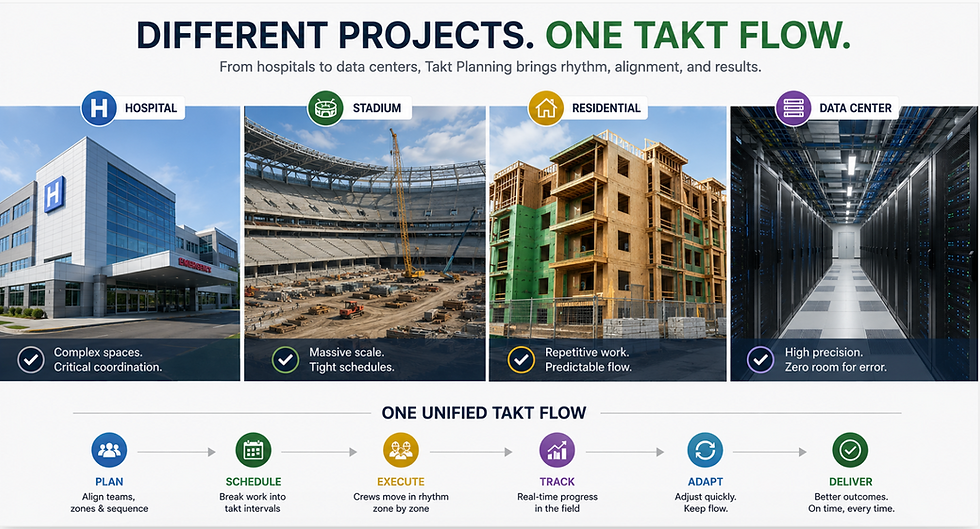
Takt Planning brings structure to these projects by defining zones and sequences that match how work actually progresses through the building. Instead of everyone working everywhere, trades move through areas in a consistent order. This creates predictable handoffs and improves coordination.
Commercial buildings also vary widely in work density. Some spaces contain large open offices with simple finishes, while others contain dense conference areas or technical rooms. Takt planning allows teams to size zones according to the amount of work required rather than simply dividing the floor evenly.
Using inTakt makes this process easier because the schedule remains visual and collaborative. The team can quickly see how work is moving through each zone and adjust when conditions change.

Comments