How inTakt supports trade flow
- Valeria Valenzuela
- Feb 13
- 2 min read

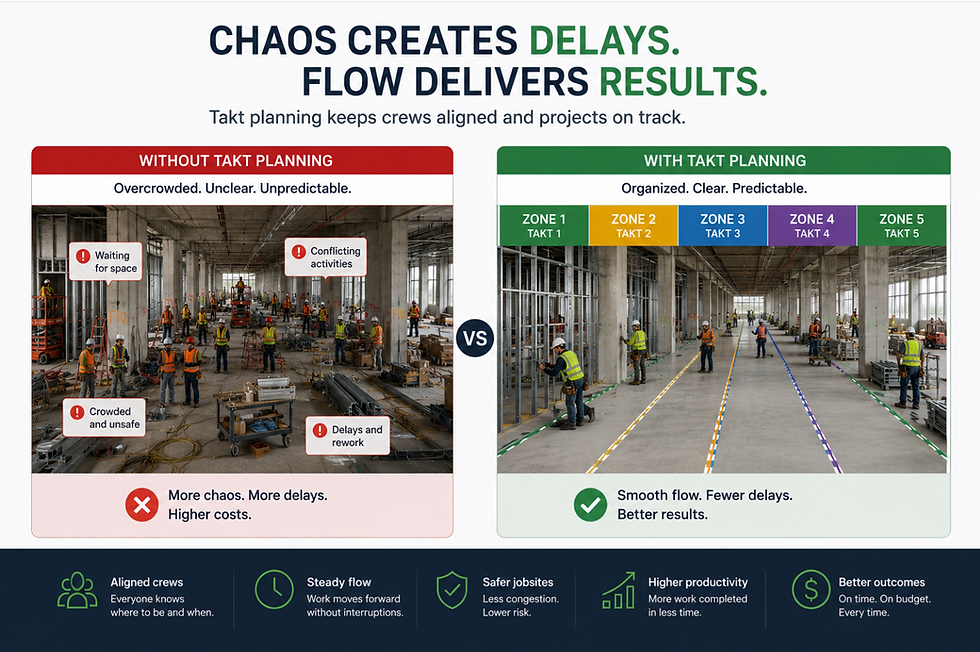
Trade flow is what makes a project feel calm. You can walk the site and sense that crews are moving in a steady rhythm, not sprinting into open space, not stacking on top of each other, not constantly resetting. When trade flow is real, the jobsite behaves like a production system. The work moves through zones in time, and the team starts thinking in sequences, handoffs, and readiness instead of firefighting.
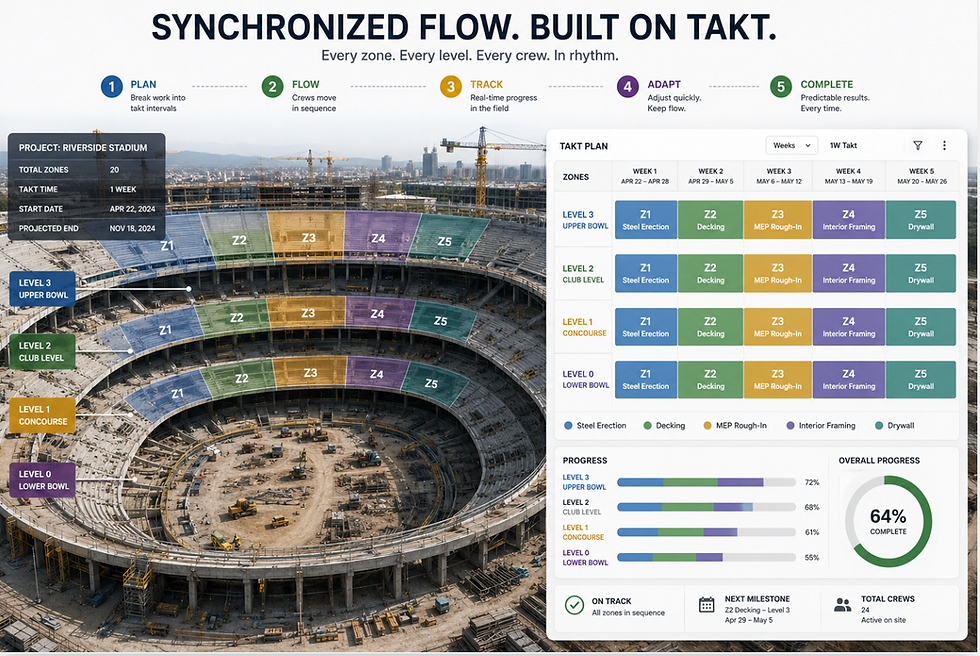
inTakt supports that by giving everyone the same visual plan to steer from. You define zones, identify the work, set the parameters, and the takt plan is generated in a format that makes flow obvious, not buried in a list. When the plan changes, the impact is visible immediately, which keeps the team aligned instead of splitting into separate versions and separate stories.
Flow lives or dies at the handoff. That is why inTakt builds in a simple way to confirm clean handoffs, so work is not just “done” in one person’s mind, it is received by the next trade and approved by supervision. When handoffs are tracked consistently, the team stops guessing where the work actually stands and starts having better conversations, earlier.
Once the flow is visible, the field needs an easy way to turn it into action. The Work Plan view helps trade partners break work into the right steps and coordinate week by week without rebuilding the schedule in another tool. Subtasks stay tied to the parent tasks, so detail supports the plan instead of drifting away from it.
The result is not a prettier schedule. The result is trades moving through zones with less waiting, fewer surprises, and a lot more trust. Trade flow is a people problem before it is a software problem, but when the plan is shared, current, and easy to work with, the team gets a real chance to run the job together.

Comments