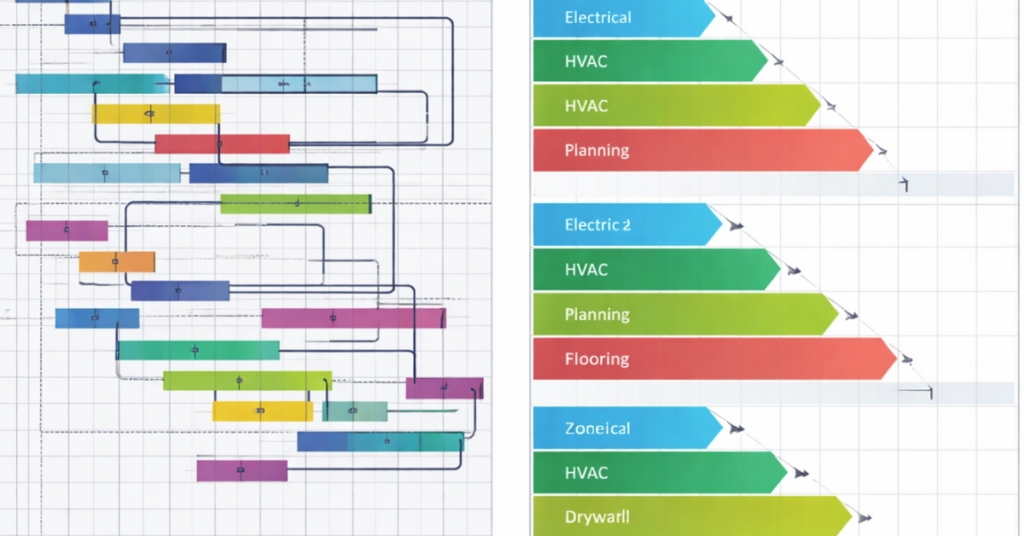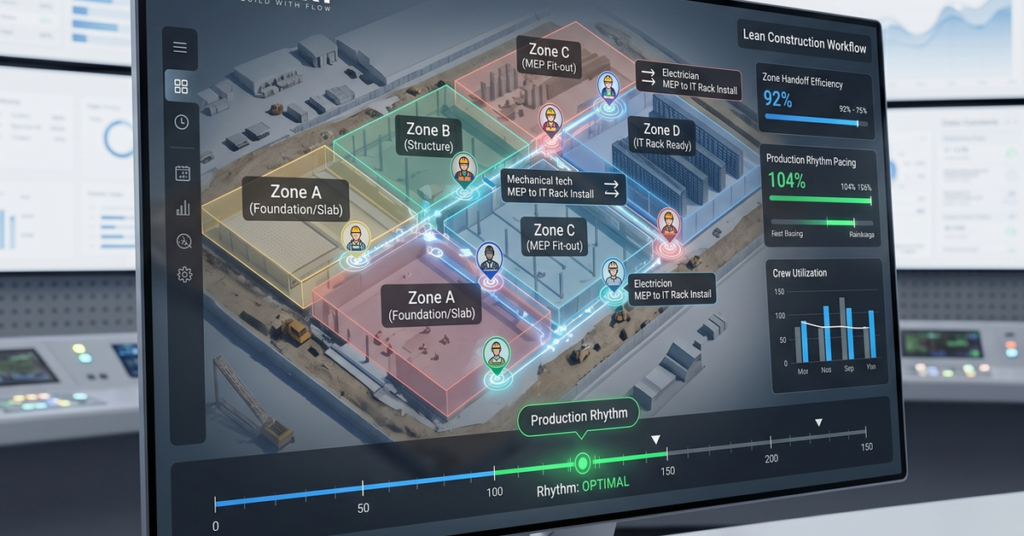
Takt Planning optimizes a schedule by focusing on flow instead of activity. Instead of spreading work everywhere at once, Takt organizes production so trades move through zones in a clear sequence. Each trade finishes work in one zone before moving to the next. That simple structure creates predictable handoffs and reduces the constant reshuffling that slows projects down.
Optimization also improves when the schedule becomes visual. When teams can see zones, sequence, and rhythm clearly, coordination becomes easier. Foremen understand where they should be working, superintendents can spot conflicts earlier, and the team spends less time negotiating access and more time finishing work.
Another key benefit of Takt Planning is that problems appear sooner. Because work moves in a steady rhythm, delays and constraints show up exactly when they threaten flow. That visibility allows teams to adjust early instead of discovering issues weeks later after the schedule has already slipped.
Tools like inTakt make schedule optimization even easier because the plan stays live and visible to the entire team. When everyone works from the same plan, adjustments happen faster and coordination becomes simpler.
Optimizing a schedule is not about making the chart look perfect. It is about building a system that helps crews move through work predictably and finish zones cleanly. That is what Takt Planning delivers.